About Us
Our Story
How a grassroots vision became a movement for lasting community change.
Our Founding
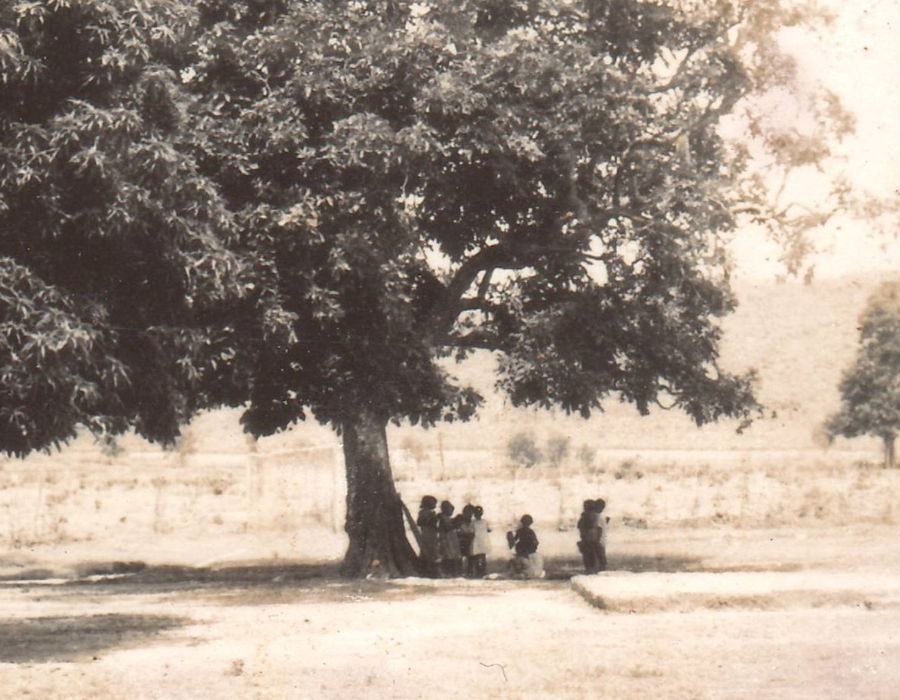
The journey of Samajik Seva Sadan (SSS) began on 2 August 1982, when Ms. Veronica Dung Dung from Sundargarh District started a non-formal school for 28 Juang (PVTG) Adivasi children under a barren Kusum tree in Banjhikusum village, Dhenkanal District, Odisha. The village itself derives its name from the barren Kusum trees found in the area. Through joyful learning methods involving singing and dancing, she inspired children to learn and opened new possibilities for their future. This humble initiative marked the beginning of SSS.
On 3 July 1983, Mr. Emmanuel Pathil joined Ms. Veronica, and together they began extending community development services to neighboring villages. In a remarkable turn of events, the once-barren Kusum tree under which the school had begun started bearing fruit and continues to do so to this day—a lasting symbol of hope, transformation and the journey of SSS.
By 1985, SSS had expanded its education efforts to eight non-formal schools serving 16 Adivasi and Dalit villages. Following its registration in the same year, the organization gradually broadened its developmental interventions across Odisha and beyond, with a continued commitment to serving poor, vulnerable and marginalized communities.
Over the years, SSS evolved from its initial focus on literacy into a comprehensive community development organization. Its early interventions included literacy promotion, integrated and sustainable village development, community health promotion, rehabilitation of 64 families affected by and cured of leprosy, and support to the Government's Total Literacy Programme. The organization also promoted women's savings and credit groups, user-group-based agriculture for poverty alleviation, sanitation initiatives under the Total Sanitation Campaign, and community-based organizations.
SSS further expanded its work in appropriate technology and rural livelihoods by promoting Ferro Cement technology through training programmes and the establishment of production units across Odisha. Around 184 engineers and more than 200 individuals received masonry training, contributing to the development of local skills and employment opportunities.
As its work evolved, SSS placed increasing emphasis on strengthening women's capacities, promoting social security and sustainable livelihoods, and empowering women, entrepreneurs, rural artisans, Dalits and Adivasis. The Organisation has worked with communities to strengthen their rights and access to water, land and forests, while supporting the implementation of the Panchayats (Extension to Scheduled Areas) Act (PESA) and the Forest Rights Act (FRA) in Sundargarh District and other parts of Odisha.
From a small non-formal school beneath a barren Kusum tree, SSS has grown into an Organisation committed to education, dignity, sustainable livelihoods, community empowerment, social justice and the rights of marginalized communities. Its journey continues to be guided by the belief that meaningful and lasting development begins when communities are empowered to shape their own futures.